Fall Equinox
Tuesday, September 22, 2026
Site and museum open Sunrise to Sunset
Celebrate the harvest season, the end of summer, and the preparation for winter during the Autumnal Equinox! This ancient holiday marks the balance between day and night, when light and darkness hold an equal share of the sky. This day also marks the transition between the warm summer months and the cool, dim winter. As a transitional time, the Equinox is commonly associated with images of the serpent which sheds its skin and is reborn.
Equinox Events
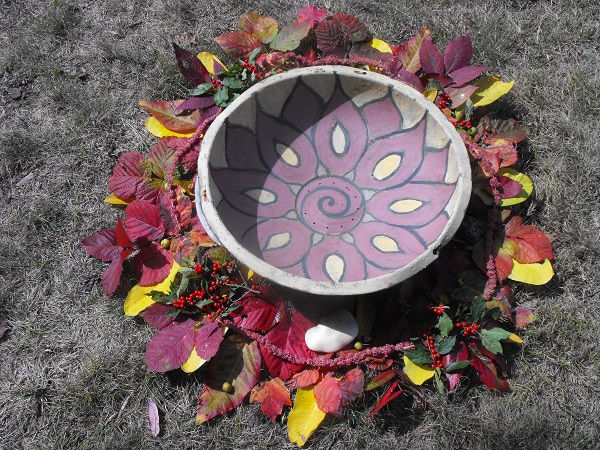 Autumnal Equinox Ritual with Katja EsserSun, Sep 20America's Stonehenge
 Fall Equinox 2026Tue, Sep 22America's Stonehenge
Fall Equinox Sunrise
On the Equinox, the sun rises directly over the eastern horizon. A standing stone once marked the sunrise alignment at America's Stonehenge, but significant erosion on the eastern side of the hill caused the stone to fall ages ago, long before the site was ever discovered. This dawn marks the last time that the sun will be this high in the sky until spring returns. The trees will soon show their brilliant autumn colors and shed their leaves in preparation for winter.


Watch House Illumination
About one hour after sunrise on the Equinox, a remarkable event takes place in the Watch House Chamber - a quartzite stone built into the rear of the chamber is illuminated by the early morning sunlight. As sunlight passes through the entrance of the chamber, the shadow created by the doorway frames this special stone, casting the rest of the chamber into darkness and highlighting the quartzite block.
This event is made all the more symbolic by the realization that the Watch House Chamber is located at the head and tail of a 2,550 serpent wall - a snake-effigy made entirely of stone. This serpent wall begins at the boulder that forms one wall of the Watch House chamber, encircles the entire hilltop, and returns to the Watch House Chamber to form an Ouroboros, an ancient symbol of a serpent or dragon biting its tail. This symbol can represent the concept of infinity or the circle of life, and the serpent's connection with the Equinox has been found at ancient sites around the world.
Equinox Sunset
After the sun passes over the top of the site, it will set directly over the western horizon. The Equinox Sunset alignment is notably different from the other astronomical markers at America's Stonehenge. Rather than a quarried standing stone placed to mark the alignment, the Equinox sunset is marked by a massive glacial boulder. Ground Penetrating Radar (GPR) scans of the area around the boulder suggest that it might be placed atop small stone legs to form a dolmen. The sun moves quickly across the horizon during this phase of the year, meaning this alignment can only be truly observed on the precise day of the Equinox.


Serpent Symbology
A little-known feature sits just beyond the Equinox Sunset Boulder on the western side of the hill. The S-Shaped Serpent is a stone feature built on the Equinox sunset alignment. This stone wall, which appears to be slithering across the hill, is split in half by the Equinox sunset. Like the Watch House Chamber, this feature links the symbol of the serpent to the Equinox. The serpents on the eastern and western side of the site provide balance, much like the balance struck between daylight and darkness experienced on the Equinox.